 The University of Rochester welcomed the international strong-field physics community to campus for Physics in Intense Fields 2026 (PIF26), the latest edition of a conference series that traces back to PIF2010 in Japan. Supported by the Department of Physics and Astronomy, the Institute of Optics, and U.S. National Science Foundation (NSF) via the NSF OPAL RI-1 award, the meeting brought together researchers working across theory, simulations, and experiments to explore strong-field QED (SFQED), high-intensity laser physics, and the phenomena that emerge when matter is pushed to the most extreme electromagnetic conditions achievable in the lab.
An International Gathering
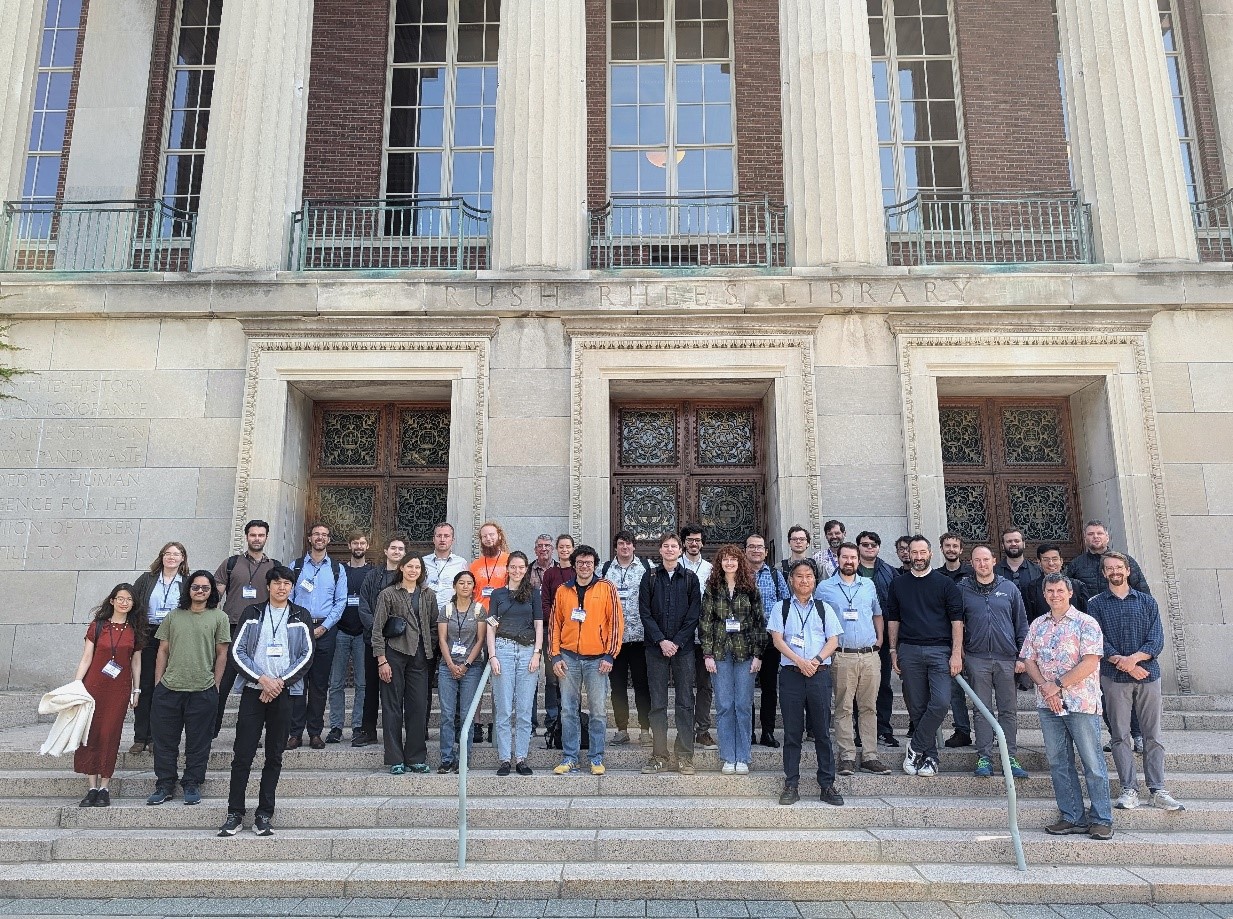
PIF26 drew more than 60 registered participants from 27 institutions, including 13 international institutions. Thanks to support from NSF OPAL, 33 students were able to attend the conference at no cost, reflecting the project’s commitment to building the next generation of researchers in this field.
Five Days of Science
The scientific program unfolded across themed sessions that traced the arc of the field — from foundational tutorials to the latest results. Topics included:
• High-intensity laser facilities
• Experimental progress
• Pair production and QED cascades
• Quantum effects involving low-energy photons and gravitons
• Gamma flashes
• Radiation and high-intensity light-matter interaction
• Ultra-high fields and the Ritus-Narozhny conjecture
• Contributed talks from early-career researchers
Students at the Center
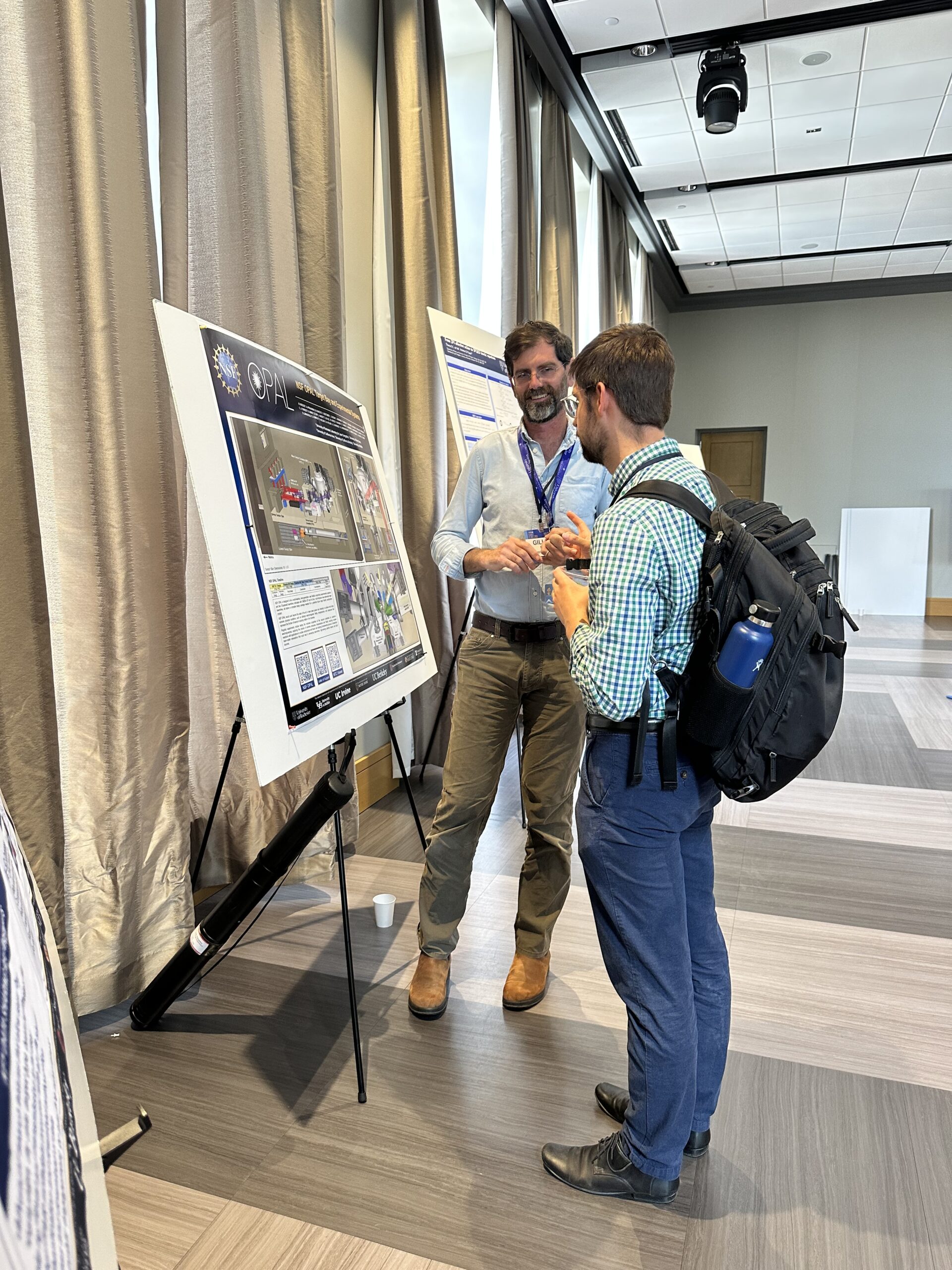
A highlight of PIF26 were the poster sessions: 13 of the 18 presented posters were led by students, covering topics ranging from laser wakefield acceleration and Breit-Wheeler pair production to NSF OPAL’s own target bay design and data-sharing infrastructure. Poster sessions were held on Monday afternoon and again Thursday afternoon, giving attendees ample time to dig into the details with presenters.