
Events
Upcoming and past NSF OPAL meetings and events.
Upcoming Events
Past Events
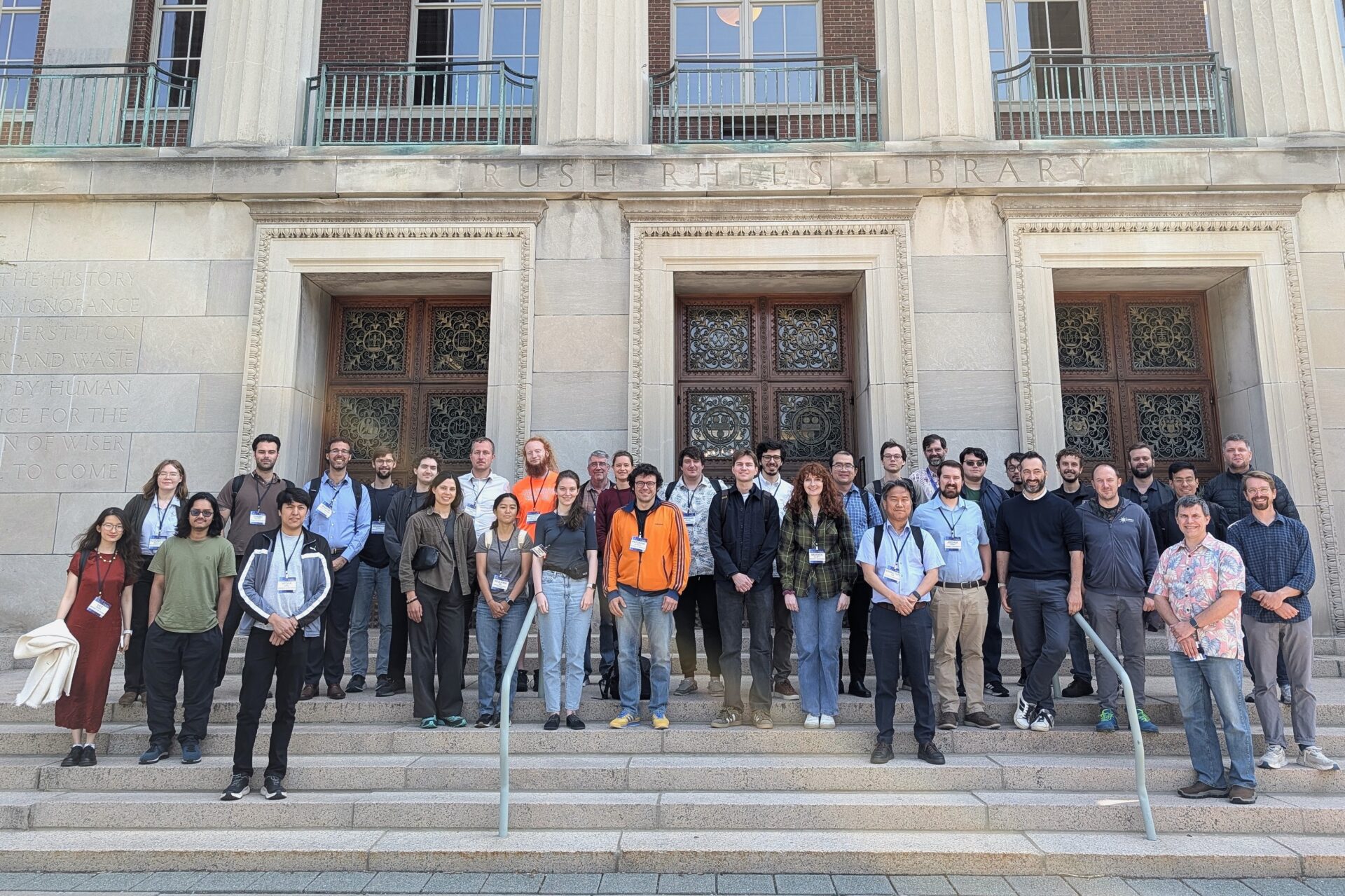
Physics in Intense Fields 2026 (PIF26)
July 20-24, 2026
This conference brought together researchers from theory, experiment, and simulation to explore strong-field QED, high-intensity laser physics, and related fields.
Multi-Petawatt Diagnostic Community Workshop
May 21-22, 2026
The Multi-Petawatt Diagnostic Community Workshop brought together scientists, engineers, and facility leaders engaged in the development and application of diagnostics for next-generation multi-petawatt (MPW) laser systems.
The workshop provided a forum to:
- Identify emerging diagnostic technologies and critical technical gaps.
- Discuss strategies for scaling diagnostics to the MPW regime.
- Foster cross-facility coordination and community-building.
- Develop a roadmap for advancing diagnostic readiness for upcoming facilities.
Community Update
February 24, 2026
The NSF OPAL team shared recent progress on laser system development, experimental capabilities, and community engagement. Highlights included advances in laser performance and diagnostics informed by a joint workshop with the Air Force Office of Scientific Research, updates on the target chamber and new flexible platen interface, and preparations for the upcoming Multi‑Petawatt Diagnostic Community Workshop in May. The team also noted strong growth in OPAL’s visibility across media channels and continued momentum in the community letter‑of‑support campaign.
2026 Joint NSF-AFOSR Next-Generation Optical Materials and Components for High-Power Lasers
January 12-15, 2026
Goals of the workshop
- Address critical limitations in material damage thresholds currently hindering high-power lasers
- Focusing on topical areas:
- Modeling
- Physics-based fabrication
- Gratings for pulse compression and beam combining
- Diagnostics and lifetime prediction
- Will solicit whitepapers for up to four “seedling” R&D efforts
- Held in January in Arlington, VA
Community Design Update
September 3, 2025, 10:00 AM – 11:30 AM Eastern
During this event, the Project Team provided an update to the community about the status of the facility design following the Conceptual Design Review (CDR) held in April.
View the recording
View slides
Experimental Use Case Template
Submit your EUC here
NSF OPAL Conceptual Design Review
April 22–23, 2025
The NSF OPAL RI-1 award supports the design of a new, world-leading, high-power laser user facility at the University of Rochester.
Two new 25-petawatt lasers will push beyond the current state of the art in peak laser power to achieve and study extreme physical conditions, such as ultrahigh electromagnetic fields, temperatures, and pressures that represent the frontier of science in studying matter in the Universe.
NSF OPAL aims to support four areas of frontier research identified by the Multi-Petawatt Physics Prioritization (MP3) workshop.
NSF OPAL Diagnostic Systems Community Update
January 16, 2025
This 3-hour session will provide an update on key aspects of the NSF OPAL diagnostic systems design.
NSF OPAL Conceptual Design Update
October 31, 2024
An update for the scientific community on key aspects of the NSF OPAL design.
NSF OPAL: Laser System Design and Critical Technologies
November 8, 2024
Given by NSF OPAL Lead Laser Scientist Jake Bromage, this talk will present an overview of the proposed laser architecture and cutting-edge technologies of the NSF OPAL system. Key achievements and future prospects of the MTW-OPAL facility, which has been crucial to prototyping many of the technologies necessary for the future NSF OPAL construction project, will also be highlighted.
NSF OPAL Project Requirements Review
February 5, 2024
A review of the top-level NSF OPAL requirements for the scientific community.